NetworkTigers discusses the role of IT in business success in 2020s.
Information technology (IT) separates good businesses from great ones. From communications to fulfillment, logistics to cybersecurity, IT can help insulate your business from threat actors and improve how customers perceive your brand and how employees interact.
Streamlining productivity
IT can streamline inter-office communications by providing secure and speedy networks. It can pass along messages from leadership in a clear and direct manner and ensure compliance through network monitoring. It can also improve communication by lowering regional barriers and ensuring easy access to email, real-time chat, document collaboration, video conferencing, and more.
Protection against threat actors
One of the major roles of IT in modern business success is safeguarding proprietary company information, employee and customer personally identifiable information (PII), and all kinds of data. The average cost of a data breach for businesses has risen steadily throughout the years. According to IBM’s report in 2023, the average cost of a data breach has now reached $4.45 million. Cybersecurity should be the number one priority for businesses, and IT can provide the key.
IT has a hand in every area of cybersecurity protection and prevention. Investing in IT can help prevent risks, detect intrusions, minimize response time, ensure system back-ups are in place, and respond to threats. IT helps keep servers up and running and takes care of threat detection and response (TDR). Through signature-based detection, behavior-based detection, and anomaly-based detection, IT maintains protective software and proactively searches for compromise indications. IT is the main defense against threat actors that seek to sideline your business and hold your customers and employees hostage to their demands.
Driving innovation
Data aggregation helps companies discover weak spots, zero in on their strengths, and compete against other businesses. IT can drive innovation by predicting market trends, analyzing forecasts, and providing valuable insight into how consumers interact with your company’s product.
Data professionals report that, on average, they see a 63% growth rate per month of data collection in their organizations. This data comes from a mean of 400 sources, with 20% of companies reporting that they draw from over 1,000 data sources to feed BI and analytics monthly. One role of IT is to collect this data and optimize its storage and handling. Warehousing data, transitioning to cloud computing, and manually coding data can all fall to the IT team.
Optimizing operations
From supply chain logistics to communication with customers and vendors, IT has a critical role in optimization. A strong IT department can improve inventory management, order confirmation, delivery tracking, and supplier coordination. Information technology can aggregate data, pinpoint delays, and suggest improvements when used to its fullest extent.
Imagine a company continually seeing delays in one area of its logistics fulfillment, like shipping. Everyone points fingers at everyone else, and management isn’t sure why these delays keep happening and how to fix them. With data analysis, a company can use a neutral, fact-finding operation to understand what area of shipping fulfillment is getting backed up. IT can provide the information that management needs to address the issue in a clear-headed manner. In this way, IT can optimize operations without getting caught up in a personality conflict.
Consumer engagement
IT is not only an internal affair. It also can have a major impact on how your customers perceive your brand and how likely they are to continue to engage. From your e-commerce platform to your website, marketing emails to mobile apps, IT can meaningfully affect the consumer experience. A sloppy or slow-loading website can drive a customer toward a competitor, just as a quick and easy online shopping experience makes them more likely to return. And when it comes to cybersecurity, customers quickly lose confidence in a brand that fails to protect their information. According to Security Magazine, up to 75% of consumers report that they would likely drop a brand or business that suffered a data breach.
Financial reporting
Companies need to be accountable to investors and leadership. IT can help provide transparency in financial reporting. Budgeting software and compliance with financial regulations can help ensure that growth is manageable and on the horizon.
IT also builds employee trust by ensuring everyone gets their paycheck on time and in the right amount. When efficiently automated and maintained by IT, payroll processing and invoicing can help retain employees, monitor expenses, suggest cost savings measures, and track employee promotions for consistent performance.
As businesses generate vast amounts of data in the digital age, IT helps steer the ship. IT collects data, warehouses it, ensures easy access for employees, helps aggregate it for useful consumption, and protects it from intruders. This can save a company money from cybersecurity threats and drive innovation from the ground up. A strong IT department is the backbone of any modern business success.

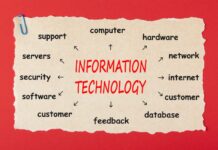
 separates good businesses from great ones.)